
Spiritual Tour India – Varanasi, Rishikesh & Tirupati Guide | Ghummofy
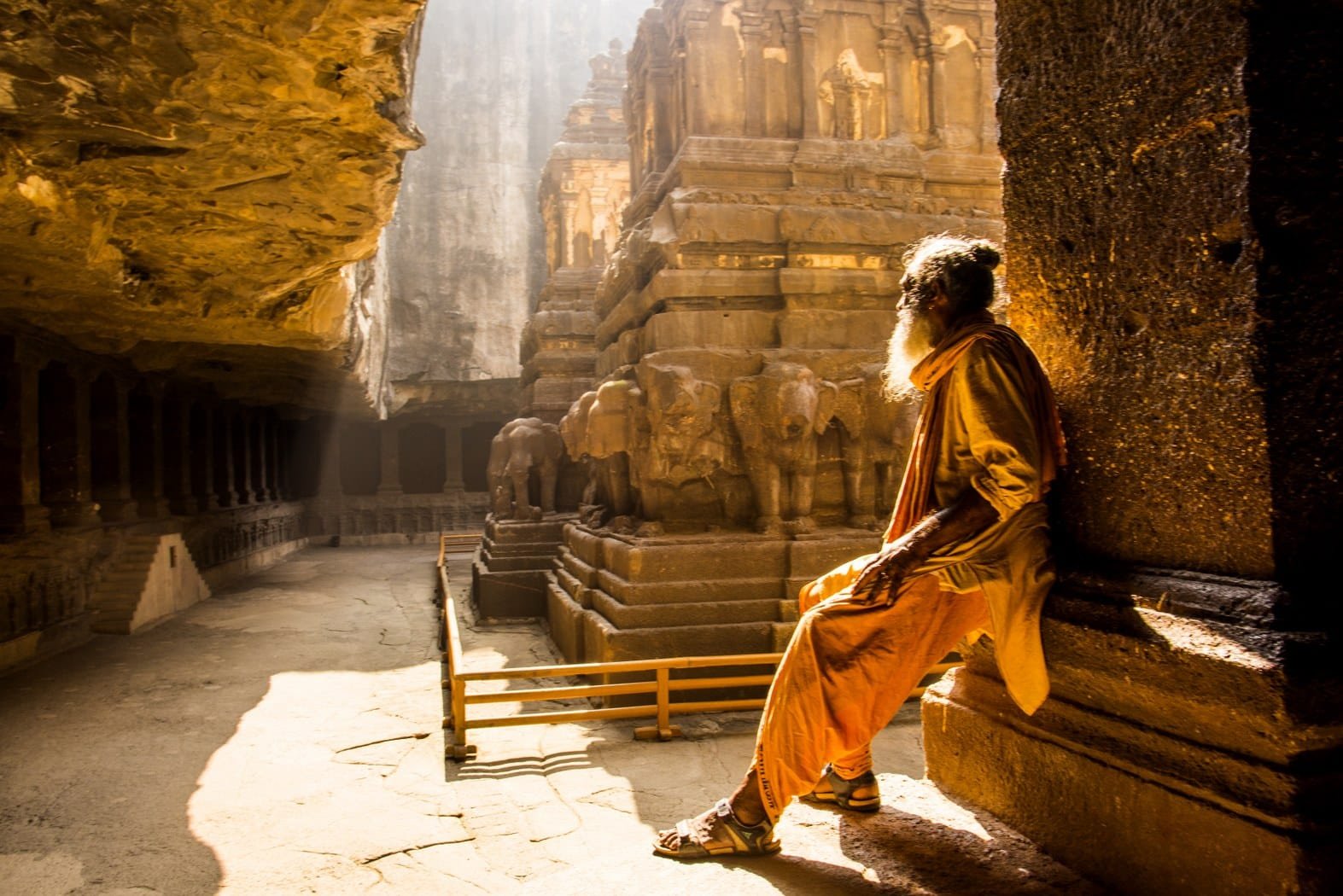
India’s soul — why the spiritual trail calls
Before the sun fully rises over Varanasi, the Ganges is already alive. Priests chant ancient Sanskrit shlokas on the stone ghats. Oil lamps drift past on the dark water. Widows sit in prayer. Pilgrims wade in up to their waists, hands raised toward the dawn light. This scene has been repeating every single morning for at least three thousand years — uninterrupted, unchanged, unhurried.
India is the world’s oldest living spiritual civilisation. Its sacred geography is not metaphorical — it is physical, mapped, breathable. Mountains are gods. Rivers are goddesses. Entire cities exist because they are considered gateways to liberation. For hundreds of millions of people, a pilgrimage to India’s holy sites is not a holiday. It is the journey of a lifetime.
This guide covers four of India’s greatest sacred destinations: Varanasi, the eternal city on the Ganges where Hindus seek moksha; Ayodhya, the birthplace of Lord Ram and home to the newly consecrated Ram Mandir; Rishikesh, the Himalayan town the United Nations named the yoga capital of the world; and Tirupati, whose hilltop Venkateswara Temple is visited by more pilgrims each year than any other place of worship on earth.
Each of these cities offers a completely different spiritual experience. Together, they reveal the extraordinary breadth and depth of Indian devotion. And with Ghummofy’s curated spiritual tour packages, every logistical detail — accommodation near temple precincts, darshan booking, guided city walks, intercity transfers — is handled for you, so you can arrive with nothing but an open heart.
India’s Spiritual Trail: Varanasi, Ayodhya, Rishikesh & Tirupati
| 01 Varanasi — the eternal city |
| One of the world’s oldest continuously inhabited cities, and the holiest in Hinduism. |
| Varanasi does not ease you in gently. From the moment you step onto the ghats — the ancient stone stairways descending to the Ganges — the city assaults the senses with incense, bells, colour, grief and joy in equal measure. Hindus believe that dying here, on the banks of Mother Ganga, grants moksha: liberation from the endless cycle of death and rebirth. This belief has drawn pilgrims, philosophers and the dying to Varanasi for thousands of years. The city’s spiritual heart is the Kashi Vishwanath Temple, one of twelve Jyotirlingas (sacred abodes of Lord Shiva), rebuilt in the 18th century by Maharani Ahilyabai Holkar and recently expanded into the grand Kashi Vishwanath Corridor. At Dashashwamedh Ghat each evening, hundreds of priests perform the Ganga Aarti simultaneously — a choreographed offering of fire, flowers, conch shells and incense to the river that is unlike anything else on earth. Attend it once and it stays with you forever. A short drive from the old city brings you to Sarnath, where the Buddha delivered his first sermon after achieving enlightenment. The Dhamek Stupa, dating to the 5th century AD, marks the exact spot. For a single city to hold both the epicentre of Hindu devotion and the birthplace of Buddhist teaching is quintessentially Indian. Visit the ghats between 4.30 and 6.30 am — the light, the sounds and the atmosphere are incomparableNon-Hindus are not permitted inside Kashi Vishwanath Temple but the Corridor complex and ghats are open to allHire a local guide for the old city lanes — the narrow galis are labyrinthine and deeply historically layeredRecommended stay: 2 nights |
| 02 Ayodhya — birthplace of Lord Ram |
| One of the seven holiest cities in Hinduism, reborn as a major pilgrimage destination following the 2024 Ram Mandir consecration. |
| Ayodhya has always been sacred. One of Hinduism’s Sapta Puri — the seven cities believed to grant liberation — it is the birthplace of Lord Ram, the seventh avatar of Vishnu and the hero of the Ramayana. For hundreds of millions of Hindus worldwide, Ayodhya is not merely a city. It is the home of God. The consecration of the Ram Mandir at Sri Ram Janmabhoomi in January 2024 transformed Ayodhya into one of India’s most visited pilgrimage destinations almost overnight. The main shrine, set within an expansive complex on the site of Lord Ram’s birthplace, is a masterwork of Nagara-style temple architecture in pink Rajasthan sandstone. Standing before it for the first time, even secular visitors report feeling the weight of the centuries pressing in from every direction. Beyond the Ram Mandir, the temple town rewards slow exploration. Hanuman Garhi — a hilltop fort-temple dedicated to Lord Hanuman, guardian of Ayodhya — offers sweeping views over the city. At dusk, the Saryu Aarti on the ghats of the Saryu River mirrors Varanasi’s Ganga Aarti in its beauty, but with a quieter, more intimate scale that many pilgrims find even more moving. Book Ram Mandir darshan slots online in advance — queue times without a slot during peak periods can exceed 8 hoursAyodhya is approximately 135 km from Varanasi (2.5 hours by road) — easily added as a 1–2 day extensionThe Ayodhya Dham railway station has been redeveloped; direct trains from major cities now serve the townRecommended stay: 1–2 nights |
| 03 Rishikesh — yoga capital of the world |
| Where the Ganges emerges from the Himalayas — a sacred town of ashrams, morning yoga and ancient temple ceremony. |
| There is a moment in Rishikesh, usually around five in the morning, when the town is so still you can hear the Ganges moving over the rocks below. The bells of a temple sound somewhere above you on the hillside. A sadhu walks past barefoot on his way to the river. The air tastes cold and clean from the mountains above. This is why people come to Rishikesh — and why so many of them never quite leave. The town sits at the precise point where the Ganges descends from the Shivalik hills onto the North Indian plain — a transition that has made it sacred to Hindus for millennia. Today it is also the world’s foremost centre for yoga and meditation, a designation formalised by the United Nations. The ashrams here range from ancient institutions with centuries of lineage to internationally renowned retreat centres offering structured courses in Hatha, Ashtanga and Kundalini yoga. The evening Ganga Aarti at Triveni Ghat and the larger Parmarth Niketan ashram aarti are devotional spectacles comparable in atmosphere — if not in scale — to Varanasi. Walk across the swaying Laxman Jhula suspension bridge at golden hour. Trek the forested hillside to Neelkanth Mahadev Temple, a Shiva shrine of deep significance set among sal trees fifteen kilometres into the hills. For couples or families seeking both spiritual depth and mild adventure, Rishikesh is without peer on the subcontinent. Rishikesh is alcohol-free and meat-free by law — embrace the sattvic cuisine; the local thalis are excellentMost ashrams offer drop-in yoga classes for travellers; no prior booking needed for manyHaridwar (30 minutes away) is easily visited as a half-day side trip — Har Ki Pauri ghat at dusk is unforgettableRecommended stay: 2–3 nights |
| 04 Tirupati — the most visited temple on earth |
| Sri Venkateswara Temple at Tirumala draws more pilgrims each year than the Vatican and Mecca combined. |
| The numbers alone are staggering. Between 50,000 and 100,000 pilgrims climb to the Sri Venkateswara Temple at Tirumala every single day. On major festival days the number exceeds 300,000. Annual footfall regularly surpasses 25 million. No other place of worship on earth receives as many devotees. And yet, standing in the temple’s inner sanctum after the long queue, in the company of thousands of devotees whose faith has brought them from every corner of India and the world, the experience transcends the statistics entirely. The temple sits at 853 metres in the Seshachalam Hills of Andhra Pradesh, overlooking the plains of the Deccan. It is dedicated to Lord Venkateswara, a form of Vishnu, and is believed to be one of the wealthiest religious institutions in the world — the gold on its gopuram alone runs to hundreds of kilograms. Pilgrims come to seek blessings, fulfil vows, undergo the traditional tonsure (head-shaving) ritual at Kalyana Katta, and receive the famous Tirupati laddu prasadam, which has a Geographical Indication tag. At the foot of the hill lies Tirupati town, where the Padmavathi Temple at Tiruchanur (dedicated to Goddess Padmavathi, consort of Venkateswara) and the Kapila Theertham waterfall shrine are well worth a morning’s visit. The full spiritual experience of Tirupati is best understood not as a tourist attraction but as an encounter with the living heart of South Indian Vaishnavism. Book TTD Special Entry Darshan (SSD) or Divya Darshana tickets via tirupatibalaji.ap.gov.in — slots open 90 days in advanceGhummofy packages include TTD darshan booking assistance — you will never navigate the portal aloneAvoid weekends and major Vaishnava festival dates unless you have confirmed slotsRecommended stay: 2 nights (1 in Tirupati town, 1 near Tirumala) |
| All four destinations on this spiritual trail are manageable, well-connected and pilgrimage-ready. Ghummofy’s curated packages include accommodation near temple precincts, pre-booked darshan slots, private transfers between cities and experienced local guides at every stop. Visit ghummofy.com to browse and book. |
Sample 10-day spiritual trail itinerary
The north India circuit (Varanasi, Ayodhya, Rishikesh) forms a natural loop. Tirupati in the south is best added as a flight-connected extension. Here is how Ghummofy recommends structuring the full trail:
Days 1–2 — Varanasi: Arrive, pre-dawn ghats walk, Kashi Vishwanath Corridor, old city lanes, Sarnath, Ganga Aarti at Dashashwamedh Ghat
Day 3 — Ayodhya: Drive from Varanasi, Ram Mandir darshan, Hanuman Garhi, Saryu Aarti, overnight stay
Day 4 — Ayodhya to Lucknow to Delhi: Explore Kanak Bhavan and Ram Ki Paidi, evening train or flight to Delhi
Days 5–6 — Rishikesh: Morning yoga at ashram, Triveni Ghat aarti, Laxman Jhula, Neelkanth Mahadev trek, Parmarth Niketan aarti
Day 7 — Haridwar: Half-day from Rishikesh — Har Ki Pauri ghat, Mansa Devi Temple, return to Rishikesh
Day 8 — Fly to Tirupati: Delhi to Tirupati flight, check in to hotel near temple, Padmavathi Temple at Tiruchanur
Days 9–10 — Tirupati & Tirumala: Tirumala TTD darshan, Kapila Theertham, tonsure ritual if desired, departure from Tirupati airport
A 7-day north-India-only version (Varanasi, Ayodhya, Rishikesh) is also available as a standalone Ghummofy package for those unable to make the full journey south.
Frequently asked questions
Can non-Hindus visit these temples?
Non-Hindus are not permitted inside the sanctums of Kashi Vishwanath Temple (Varanasi) or Sri Venkateswara Temple (Tirupati). However, the ghats of Varanasi, Ayodhya’s Ram Mandir precincts, Rishikesh’s ashrams and all four cities’ aarti ceremonies are fully open to visitors of any faith and background. Ghummofy itineraries are carefully designed to maximise the spiritual experience for both Hindu pilgrims and non-Hindu travellers.
How do I book Tirupati darshan online?
Darshan slots at Tirumala are booked through the official TTD portal at tirupatibalaji.ap.gov.in. Special Entry Darshan (SSD) and Divya Darshana tickets are released 90 days in advance and sell out quickly. Ghummofy packages include full darshan booking assistance — our team monitors availability and books your slot as soon as the window opens, so you never have to navigate the system alone.
Is the Ayodhya Ram Mandir open to all visitors?
Yes. The Ram Mandir at Sri Ram Janmabhoomi is open to all Hindu devotees free of charge. During major festival periods such as Ram Navami and Diwali, online slot booking is recommended to avoid very long queues. The broader Ayodhya Dham complex — including the gardens, exhibition spaces and the Saryu riverfront — is open to all visitors regardless of religion.
How many days are needed for the full spiritual trail?
A comfortable, unhurried tour covering all four destinations requires 9 to 11 days: 2 days in Varanasi, 1 to 2 days in Ayodhya, 2 to 3 days in Rishikesh (with a half-day in Haridwar), and 2 days in Tirupati. Ghummofy offers a 7-day north India package (Varanasi, Ayodhya, Rishikesh) and a 10-day full trail package including Tirupati.
What should I wear at these pilgrimage sites?
Conservative dress is essential throughout the spiritual trail. Wear full-length trousers or traditional Indian clothing such as sarees, salwar kameez or dhotis. Cover your shoulders. Carry a dupatta or scarf to cover your head when entering shrines. Remove footwear at all temple entrances without exception. Modest, respectful dress is not merely expected — it is a mark of sincerity that is genuinely appreciated by local devotees and priests.
What does a spiritual tour package to India cost? Ghummofy’s spiritual tour packages start from ₹18,000 per person for a 7-day north India circuit covering Varanasi, Ayodhya and Rishikesh, and from ₹28,000 per person for the 10-day full spiritual trail including Tirupati. Packages include accommodation near temple precincts, all intercity transport, local guides and darshan booking assistance. Temple entry and darshan at all four sites is free or nominally priced.
Ready to Experience the Incredible India?
Get a personalised India Tour Package — Taxi Services, Hotel Booking ,Tour Packages & more.
We’re based in Jaisalmer. We answer every enquiry personally, usually within 2 hours.